Michelle: That was terrible! Edit it out!
Winona: And that’s where we start! Hello and welcome to the social eye pod!
[Music]
Michelle: And so then I was like on the ground and I was just like screaming… like ahhh!
Wynn: I have theories!
Winona: And I’m like, is that like first date goals?
Iris: y’all can’t see me but I’m sitting in a relatively dark room which is what I prefer. So.
Wynn: Welcome all to the Social Eye podcast! Sociologists take on big and small issues and make the political personal. I’m Wynn, I use they and them pronouns.
Winona: I’m Winona, she her pronouns.
Iris: I am Iris they or she pronouns.
Michelle: And I’m Michelle and the pronouns most comfortable to me are they and them.
Iris: Go team!
Wynn: Yay I’m Wynn. I am gender queer and non-binary and that is why I use they them pronouns. I am a Taurus moon… No! I’m a Taurus sun! A Leo moon and a Sagittarius rising. And I often find that memes related to my signs do pretty regularly fit my personality even though I have some skepticism.
Winona: I am really glad you said that, because it’s such a wonderful segue, because I have been skeptical of my signs for most of the time I’ve been aware of them. I am a sun Aries, and then I had to uh pull up Co-Star just now because it doesn’t matter how many times I’ve read this, like dozens and dozens and dozens of times, and I still can’t remember my moon or rising which tells you the extent to which they resonate with me… but it’s a moon Libra and a rising Sagittarius, which I guess makes sense when people explain their read on that to me. But then I can’t help but feel like they’re just like filling in the blanks with what they already know about me. But like the Aries thing feels real after a very long road to it. I feel like I had to grow into being a ram that headbutted my way through things. That’s not something that came naturally as a kid. Iris what about you?
Iris: I am a Scorpio sun and then I have a Sag moon and a Cancer rising. There’s a whole lot of depthy water with all the feels and some fire that comes out and creates a bit of steam sometimes. And you know it resonates for me pretty well. I’m pretty scorpionic. Y’all can’t see me but I’m sitting in a relatively dark room which is what I prefer. So yeah, I do embody a lot of the Scorpio dark academia witchy vibe.
Winona: I so relate to that too! The sun just came out today after snowing for the last two days and the blinds went shut immediately.
Michelle: I’m the opposite! The sun gives me life and I need it. I’m living in Ohio right now and it’s like one of the worst places for seasonal effective disorder and it slaps as the kids say, but I know I was supposed to prep this but I felt like it would be disingenuous because… so I’m an Aries, I know that for sure cause, who doesn’t know their like first sign these days, right? But I have an aversion to like, social trends and maybe that’s the sociologist in me. maybe it’s a little something more… but I yeah I’ve been told so many times, especially since my partner is like very knowledgeable about astrology, and very into it and he’s told me time and time again, like I cannot tell you, though what my sun moon rising. I know one of them is like supposed to be the first one. Cause I have that skepticism, when y’all were talking I was like, I’m not going to be too far off what y’all think… but yeah, no, it’s just when I was younger I was just like flippantly like oh yeah whatever. But more so like actually trying to give good thought to it, I find it interesting as like a science. My sister bought me an astrology book cause I’m curious about it but the way that I first engaged with it and like mostly interacted with it was like on social media and these things that seemed like they could be applied to anyone and it just very much so seemed like pseudoscientific a lot and just people using it for whatever they wanted to use it. So it didn’t feel like it actually had a lot of meaning. I’m very meaning driven, so I just personally haven’t given it too much of my brain yet, but I am curious what you know astrology is all about? I’m curious about the science of it. And then it would be interesting sociologically to connect that to then how it plays out in the social world.
Winona: I feel very similarly and not me in the back of my head being like, well that this is so very Aries of us to not know the other signs!
Wynn: I have theories! Um cause there’s something to the time of year that you’re born and then people that are born around that same time are going to be spending the first months of their life indoors or outdoors, or times of the year that we’re more or less likely to be around other people. And then generationally too, your generation then has all of these factors. So are we feeling some sort of gravitational pull from the alignment of the stars and planets? Or is it that these are, what is the word? Correlational but not causational! Because here’s the thing, so I said I’m a Taurus sun, I love being in bed, I love being comfy to like a really strong degree, I do think that I have a pretty stable personality, I don’t think I’m stubborn, but people close to me have said otherwise…
Winona: So real.
Wynn: So, so again I’m like, maybe there’s something to being born in the middle of May and spending the first few months of my life being comfy, I don’t know? That’s my theory.
Michelle: I was definitely thinking about the first one, of like, when we’re born and when we’re celebrated then is in totally different times of the year. So like I love spring and when I was a kid it was mostly because my birthday’s in the spring, but I just love the rebirth of everything after a winter. I feel like it definitely has something to do with also being celebrated then, cause if you’re a summer birthday – big old summer bash, but then there’s the thing of like, you don’t get celebrated in school. So that’s got to do something to the personality a little bit too.
Winona: Yeah 100%. I love that! We’re living organisms right? We live according to seasons, regardless of what modern life broadly defines, how it shapes our life according to rhythms that are very much not organic, yada yada sociology, nevertheless… that truth of being creatures that evolved on this earth and its many cycles and patterns is true and I think astrology can speak to that. Maybe there is something about like the way gravity cycles and has patterns and the solar system to that as well that we just don’t understand yet. I can imagine a lot of folks, because of the stigma in like more serious scientific circles, would tend to avoid looking at these things seriously. It’s similar with paranormal investigation. It’s this fringe, almost cult thing. But it’s not like humanity just started observing and making general sense of our world in the last 300 years, starting in the west. Problematic assumptions there! Alert! And there’s probably some wisdom that goes a bit further back that we can continue to learn from today.
Michelle: Yeah You got me thinking about like like indigenous wisdoms and ancient wisdoms and how we’re like so alienated from like our humanity right now and like then because of post colonization and right the westernization of the world and whatnot. But at the same time that’s why it feels superficial to me a lot of times like the whole conversation or talk around or like signs and stuff like that because it feels maybe disconnected? But that’s why too I don’t want to be just like write it off entirely because I know there’s a lot that I don’t know.
[Music]
Wynn: 100%. We are all sociologists. That is how we all know each other. So what brought you all to sociology?
Michelle: I found sociology in undergrad. It was my first semester of undergrad, but I think what brought me to sociology started well before then. I grew up in Boise, Idaho and a very homogeneous culture, very conservative, and is increasingly becoming so… So I grew up there, and there was a lot of sameness, but I experienced a lot of difference growing up. And we were very money poor, a lot of my younger childhood was spent living with my grandma in a house without electricity, and that was not uncommon with other people in my family. And because of that I think we had like a very queer family structure. Not something that I really would like termed it back then, or really understood, but in hindsight, right? We had one of my grandma’s, not biologically related, but my grandma’s best friend, who was really the caregiver. She was disabled. And so having a disabled woman as a matriarch I think really like kind of shaped how I understood the world from a young age. But then I became really aware of like class and gender differences around puberty, and I went to, you know, your average elementary school… but when I started getting into junior high and interacting with more people from different parts of the city, and then first like really meeting people who came from wealth and were of like higher classes and getting to experience what their life was like, seeing the different things that they did in their homes the different ways that their parents treated them, right? I internalized some classism at a young age because I saw that, and then I wanted that to be the norm of my family. Long story short, for instance, I came home one time, early teens, and made my family dinner and made us sit around the table for dinner. Because I was like, this is what’s normal, right? This is what families are supposed to do, right? I don’t believe that now. So things like that I would like bring home and start instituting in my house because I observed it in other places. And then along those lines I became a bit more critical and understanding of what this all meant, but from those younger years I started questioning. I’m seeing these differences, but I didn’t understand what made people behave the way they did, not in like a psychological component, I noticed certain people acted differently or had different realities. And so I was interested in that and I just kind of like started noticing it. But then I didn’t have any education around that necessarily. And it wasn’t until undergrad, I was undecided and I took an intro to sociology class not knowing what it was at all. I had one of my favorite professors of all time teach that class and it just made sense from day one the way that she was talking about the world and like these different things you know how it’s organized, and how socialization is a thing, and we learn different things depending on our upbringing. And I was like, yeah this is it! And I was like this is what’s got my interest the most and I pursued that throughout. And then fortunately to find McNair and got into grad school for it and here we are!
Iris: Amazing! So this is Iris here y’all! And I grew up, as it turns out, somewhere that is culturally and somewhat geographically in proximity to what Michelle described, only a much smaller town. So a really tiny town. We were essentially in poverty. We were the family that people would come and drop boxes off on the doorstep and things like that. Wrong side of the tracks so to speak. Just all that kind of stuff. And a large family and part of a cult, essentially a very large well-known cult, but that’s what it was for sure. I’m a little bit older than the rest of the crew here, and so I didn’t have access to anything that gave me the vocabulary, the concepts, or anything, not only to talk about being queer and trans and things like that, but to even self-conceptualize, let alone self-actualize those things. So all I felt was just that I was really weird, and kind of broken, and that something was wrong with me. And I had no idea why. Like I just felt super out of place. So if that doesn’t steer you towards sociology, I don’t know what does. Cause basically I felt like a little alien that had been somehow dropped off on planet Earth, and I was just like, where am I? What is going on? I just always felt like I was on the outside of a glass dome, kind of peering through it, watching the world happen. And I just felt honestly, quite disconnected, which there’s also some kind of PTSD stuff and whatnot in there too. But yeah, things just always felt very strange to me. There was strangeness in the familiar, right? Which is the sociological lens. And then in my undergrad, I met a couple people that were sociologists and they’re like “Oh my gosh you’re you’re a sociologist! Like you should do that!” I’m like “What is that?” And then I started my undergrad and I studied sexuality gender and queer studies, and a lot of the folks that we read happened to be sociologists, and I was just like, “Oh this is amazing!” And so that’s really when I formally was like, “I want to do that.” And yeah, so that brought me to sociology and wanting to just, better understand myself, my place in society, and then try to work with incredible folks like y’all and others to get information out there that maybe helps others make more sense of this very strange planet that we’re on. So yeah that’s it.
Winona: There’s a lot in both of what you just said that resonates with me. And so like I’m trans, I’m a trans woman. This is a very trans podcast FYI, if you the listener couldn’t get a sense of that already. So, yay be warned, and yay be very welcome. I think to be trans is to be inherently at the core of oneself, outside of the system, regardless of where you’re brought up, but especially when you’re brought up somewhere that’s very politically reactionary or that like culturally does not have a place for who you are, so to say. There’s kind of an an intuition for me that came with that that I think is often a common experience among friends and loved ones for me, famously made an analogy through the Matrix movies as a trans allegory with dysphoria. There’s this sense that everything’s kind of wrong, and you don’t fit in it, you take the pill and then you get to see the world for as it is and find a place in it that is one of resistance, rebellion, and hopefully revolutionary… Um that’s something that’s long resonated with me and it’s a big part of why I’m here. I also grew up in a similar area, I grew up in the suburbs of a Salt Lake City farming town turned suburb settled by the Mormons. A place that was a culturally, let’s say not a kind place for a little queer kid to grow up in ways that sounds very similar to the two of you. It was mostly intuitive, but it was always kind of there. Like I found a lot of expression through identifying as an anarchist as a teenager, and like through radical music through punk and hardcore and metal and stuff like that. And it very quickly kind of became a political journey for me. When I was still a kid I could not wrap my head around why the US was invading Iraq for the second time when it was wildly unpopular and got involved in like movement work through anti-war politics. As I got older I encountered sociology first in a high school social studies class. I enjoyed it but it didn’t really resonate to the point I wanted to make it core to my life just yet. And then in college I started to learn more of the tools that sort of aligned with the place I had already put myself on the political left. And you know contrary to the right-wing stereotypes it it’s kind of rare to actually encounter Marxism in US academia but I did – At least in my neck of the woods that is rare- and getting more involved with stuff aligning myself more with environmental movements I ended up finding Marxist ecology within sociology, that very quickly became sort of my theoretical home and I sought that out for my graduate work. So now being in sociology, having ever been fundamental to how I understand my place in the world and how I would like to change it, I feel very motivated to contributing to that intellectual work and to sharing the same critical thinking and other tools that have helped me free myself. It wasn’t guaranteed I was going to encounter them. Wasn’t guaranteed I was going to actively take part towards liberation, in all senses of that word. And I am very motivated by sharing it.
Wynn: So well put! I love that you noted that all of us are trans. We also, if it’s not obvious, don’t actually know each other that well. We are getting to know each other through this podcast and that is kind of beautiful because there’s part of each of your stories that I’m like, “Oh I have that.” It’s kind of lovely! I grew up in sort of a weird lower working class. Like part of my childhood was in poverty and then part of my childhood was kind of stable. And my family was wealthy enough to buy a home at a particular point, but not wealthy enough to afford food regularly. There was just different things that happened. So like I definitely had like that like class consciousness really early on, and my school there was a handful of really poor students and it was really obvious, and then some really rich students and a lot of middle class. Again like something that was really obvious to me, and made me feel like a bit of an outsider. Also, I grew up in a cultlike religion. And the message at church was always, you are an outsider. And then at a certain point being assigned female at birth there was a lot of things that were unattainable for me at that church, things that I felt were unfair to be unattainable. So I just started to get a gender feminist consciousness in my high school years. And then I started to get a work consciousness. I lived in a smallish town that was predominantly white and we had like a minor tech industry and so I had a paid internship after school in high school. So like I had this like privilege but I started to see all these assumptions about my capacity and what work should look like. So I started to have these experiences, and then I took a sociology class in my community college, and I was like “Oh my god this is it This explains it.” And I want to say I actually got a C in that class. When I have students that get lower grades I’m just like, don’t worry about it. I love that, especially early on, because it’s like it just meant that I had a lot going on and I wasn’t quite fully engaged at the moment. But yeah, I just started to get really into it with wanting to understand that gender and work. and trying to understand myself and why I felt like an alien and like I was always a problem everywhere. The bull in me, that Taurus, being a little bit stubborn, of like, don’t tell me what I can’t do! So yeah I just love hearing like a little bit of like, oh! and somehow I also ended up just meeting Marxist people who were like really questioning these systems along the way who were really influential in introducing me to theories and giving me that framework to be critical which was something I know not everyone has.
Michelle: I love that you said that because so it like seems counterintuitive but my I did my undergrad at Boise State University and, it was like my plan Z school, I’m sorry for the fans out there, but I grew up in Boise and like everyone was about it and I’m telling you, I had this aversion to social trends since I was young… We were really poor and I was like, I want to get out of Idaho so bad! And so yeah I tried to go to other schools but I didn’t know how the college system worked back then, being a first gen student. And long story short, I ended up going to Boise State University, but I was also very fortunate to have mentors and instructors there that also really encouraged us to be critical. We had a research lab dedicated to critiquing neoliberal higher education, which was like infamous at the university, right? And so yeah, and I went into it and I came out of undergrad thinking that all sociologists were these really forward-thinking literally people then found out that that is not the reality. We have a lot of positivists out there. Yeah. So I felt yeah very privileged in that sense too, and very counterintuitive again, cause I feel like I wouldn’t have guessed that that’s what the sociology department at Boise State was like, but it was! It was very small and intimate and it was very encouraging of critical thought. Yeah.
Winona: So many folks I talked to who are on similar trajectories to us. And I’m noting common threads for all of us, despite coming from a lot of different places, it’s having those like, educators and and those teachers, and those mentors who are able to help us along, combined with the, uh, the grit of being a ram, of some sort and or another animal that likes to batter doors down, and or each other down with antlers or horns or what have you. Again, we’re organisms. Anyways yeah very much relate to that, and I think it’s a really important aspect of this line of work, and why we’re here talking about it, and also why we’re doing it in this manner, where we’re not in the classroom with all the opportunities and constraints that that provides, at least speaking for myself, I want to share this knowledge and help share the knowledge of others far smarter, and more knowledgeable than me to a much wider audience that may not have the privilege the opportunity to attend the classroom, or may not end up in the right one, right? I think that, uh, we all have a right and a stake in our liberation and I want to share those tools as wide as we can here.
[Music]
Wynn: That makes me think of my own critical consciousness was really fired up when I read Paolo Freire’s Pedagogy of the Oppressed, and that was within the context of thinking about teaching, and thinking about learning and education. And education through dialogue. And that is part of why I’m really pleased that there’s four of us here, we can actually have a full-on dialogue between multiple people with these different life experiences, but some similar threads, so that we can have common ground, but learning from each other. That’s how I approach my teaching too. It’s exhausting, but so worth it. I think as you were talking Winona, made me think of teaching in particular. We are constantly learning from each other through our conversations, and this is just one way to do that.
Winona: 100%. Yeah I’m glad you brought up Freire or Freire… Yeah my whiteness is showing… my, my being from Utah… but also very influential for me, incorporating very intentional, and hopefully liberatory dialogue practices into teaching. Recognizing that in many ways, the learner, the oppressed person in Freire’s framework, right, is bringing just as much, if not more, and certainly as valuable, knowledge to the learning process. And it is through dialogue work that we can do that. And it’s obviously not explicitly quite the same as standpoint theory per se, although they have things in common, but nevertheless, one’s standpoint, one’s position in the world, where one’s come from, their experiences, stuff like that, is all valid and legitimate knowledge that I am very motivated in my teaching to help provide the skills, the tools, the critical thinking, the knowledge about these larger systemic processes, structures, forces in society, to make sense of it in a way that is empowering. This is maybe my fault that the conversation got steered so much toward teaching, but that is the number one reason I’m in the game. I love the research work I get to do, what I get to contribute to with a lot of humility. But that’s definitely a number two priority, for me. Yeah, I want to share what was shared with me. I’d say in terms of my own teaching practices, number one in addition to Freire is probably Lev Vygotsky’s notion of the zone of proximal development the ZPD, which is something that lives in child psychology and developmental psychology. Actually I want to say a lot, not my wheelhouse, but fundamentally boils down to getting a sense of where someone is, and helping them take the next steps on their growth journey, however relevant to teaching. Right, that zone of proximal development is in between where one is, and where one wants to go, in terms of their education. And given where they’re at, how far can we move someone along? And myself in kind. And so I try to teach in a manner that is centering folks’ lived experience, their knowledge, get a sense of where they’re at in terms of the work we’re doing in my classroom, and how do we get to the next step is the priority.
Michelle: I love it! I’m just so happy listening to y’all talk about your teaching too! I am so excited to read Pedagogy of the Oppressed! It’s literally in my book bag, but I haven’t cracked it open yet. And I’m so excited even more now that y’all were talking. But it’s really interesting how the notes I took on my approach to teaching, it seems to be close in line with that. And that’s probably because I grew up knowing certain impressions, and like, what I wrote down was like, my teaching is very like, I try to make it as non-hierarchical as possible. Centering students experiences as valuable data if you will, having them apply these teachings of sociology to what they’ve actually experienced, because that’s what’s going to stick with them. Especially if teaching an intro class where you know that majority of the students aren’t going to be sociology majors, you just want to at least get them to think a little bit more critically, and have become a little bit more aware beyond your classroom. And then beyond that, just being very interactive and very conversational. Like even when I quote unquote lecture, it’s not a straight up lecture, cause that’s just not my style. But when I do, it’s very much so like, let me get your input at every step of the way, because I know that I don’t know everything. And I think it’s really good to admit that to students too. And when you don’t know something, to like use your resources to figure it out, cause that’s what they’ve got to do. But I really love the idea too that you bring up Winona, of the zone of proximal development. And I wrote it down and thinking yeah, like meeting people where they are essentially, right, which is something that’s so important. And so like, I like to implement sometimes like these informal questionnaires at the beginning of classes to just see like, what do you know about sociology? Or like, if it’s gender class, like what does gender mean to you? And then like revisiting it at the end of the class, and be like okay, now what are your thoughts and ideas around this? And seeing that growth is really cool. Yeah. And then just trying to be as personal as possible, personable, personal when getting to know students, because I know for me, that that was so valuable. I mean in my teaching philosophy, I talk about like seeing the unseen, which is like kind of almost like a double entendre, sociologically speaking, but I was a student who went like, largely unnoticed throughout the majority of my schooling until that English teacher in like my junior year. You know how it goes for queer kids, often? So for a for a long time, I mean I was like, pretty decent at school, and you know, so I continued, because it was almost expected of me, because that’s like, I was good at it. I wasn’t like a, a star necessarily, but I think largely because like, I was not noticed by a lot of my teachers, I was able to just kind of like fly under the radar for whatever reasons, you know? And so, trying to see all of my students for who they are, or at least like who they’re showing me they are, and trying to make them feel special in the classroom, and in the academy, and pointing out as often as possible that the academy university is here in America, it’s not set up for you to thrive. It is not. And so like, how can we, can I, help you thrive in this system that’s not set up for you to do so? Especially if you’re a multiply marginalized student. Just letting them know like, I see them, and I’m a real human, and like I, and like I’m very informal, I think, because of my upbringing. So I, you know, I let them decide what they’re going to call me, but it’s never Mx. Fretwell or anything like that. It’s just like, call me Michelle, you know, unless you’re not comfortable with that, and you want to call me something else, teach is one I really like, but I love y’all’s perspective, and Iris I’m excited to hear about your teaching!
Iris: Thank you y’all! Um that was a lot of gorgeousness! Yes, I am definitely, uh, learning some things from y’all that I want to incorporate. For me, I think that my time teaching in the classroom is deeply informed by the fact that I am a first generation, non-traditional transfer student. So I’ve attended three different community colleges before I finally settled into my bachelor’s program and then went on to a masters and beyond. But that experience really affected me a lot. And growing up in a home where college was never even mentioned, I’m fifth of the kids in my family, and none of my older siblings went to school. So it was just like it was something like, “Oh we don’t do that, That’s totally off limits to us.” No one at school even talked about it cause they were like, “Oh you’re one you’re from that family, Yeah we won’t bother telling you about college.” You know it’s like kind of how it was. So I definitely approached the classroom with a lot of humility. Just to give where I’m at right now, I am an academic professional. I’m not like a full-time faculty, but I am teaching courses that are meant to help students bridge from high school into university. And so it’s things around just making sure that they feel like they are in the right place, that they belong. And it’s really pitched as college success skills, but for me it’s truly more of, every time I’m like, you’re amazing, you belong here, we all benefit from having you here! And I tell them I’m a student as well. Like I’m taking X number of classes this term, so I share that with them. I share struggles. And I tell them, I’m like, I am learning from you, and we’re all learning from each other. So like let’s show up for each other. And like I go in with my plan for the day but if they’re all in the zone of connecting with each other and making friendships or talking about the concepts that we’re studying, or the podcast we listened to, or the video we watched, or whatever, I stop looking at the clock and I’m like, I’m just going to let this go, cause if they can feel like they are grounded on this campus and in this community and are starting to make social connections, but also intellectual connections, to me that’s the best thing we can do. So I just try to focus on the welcoming and belonging, the genuine, not like the PR and marketing concept of that that a lot of universities engage in, but like truly, you know, you belong here, uh, you you earned it, and also all the resources here! So many students… you do college like I use Photoshop, which is where like they engage with about 5% of what’s available, so you try to share all the resources, and I’m like y’all are paying for this, like it’s yours. Don’t like go plead for it. Don’t ask for it. Like take it. It’s yours. You know, please engage with all the richness that this institution has to offer you! So that’s really kind of the the focus of where I’m at. But then certainly meeting people where they are and so forth, and just so they don’t end up feeling overwhelmed, just be like “Hey you’re good, Wherever, you are, you’re good. Like we’re a community. We got you.” And then, just like learn together. And I always learn so much from my students. It’s just, I never forget it’s a tremendous privilege to be in the classroom with them, you know, as my colleagues, even though I’m in the position of power, and I can’t change that fact, but they’re my colleagues, 100%. We are trusted with this position, for whatever reason, and what we do with it matters. It’s there either way. I aspire to it being beneficial for everyone in the room.
Winona: I also worked, well a similar role, not exactly the same. I was was in a position for a couple years where I was an adviser among other things, advised students on some academic programming. I, uh, was the administrator over and that was the best part of the job. Easy. Being able to work with students on a one-on-one basis is something that I miss quite a bit now, working as a graduate instructor. I actually, as you all were talking, there was a couple of things that stood out to me. We all try to listen to our students, and our own personal experiences inform our desire to make our classrooms, like, really successful. That is also part of what has really benefited me with teaching and has allowed me to adapt.
Wynn: I don’t know how many of you have all been teaching over the last like four-to-five years with students who were high schoolers when the pandemic happened. There’s just been this shift in student needs. So it it’s that thing of having that personal experience, but like my personal experience just tells me that people need somebody to care about like, what their experience is, no matter what that is, and like to sit down and listen to them and not to like get jaded over time. I don’t want to like go too much on a rant Um I was just…
Winona: Rant! Rant! That’s kind of isn’t podcasting? Just going on rants?
Wynn: Tell me if this, if I, or go too long, but I was just talking to somebody in my department whose expertise is in death, right? And we were just having this conversation about teaching in particular, not about death, but like she brought up that she always gets frustrated when other faculty complain about students grandparents dying. And I’m sitting there, and I’m like, do they not remember what I was like to be like 18-to-22? And the fact that at that age, you know, if you think about like your parents are probably in their 40s to 50s, their parents are in their 60s maybe their 70s or older? And that’s the, I’m sorry to tell you, but that’s the time that people start dying. And like that’s just such a common experience. And then it’s going to happen multiple times, because you have a classroom of 30 to up to 70 students, I don’t know if you have larger classes, but like you’re going to have multiple students every year and it’s going to keep happening. And then I also brought up that one of the the other things to consider is that, particularly white culture does not have strong rituals around death. And we have this, we have this expectation that you handle grief privately and it shouldn’t affect your schoolwork, especially grandparents. But different cultures, which we have a much more diverse student body across the board, different cultures have different family rituals around death. And so for students who are not white, they may have a stronger sense of responsibility to their family to go, and go through the grieving rituals. And even for our white students, there are a lot of folks who want to try to reclaim the ability to grieve. So these like, different assumptions. So I just work really hard to trust students, to believe their stories. Who knows how many of students have lied to me? But I personally don’t think I’ve had a lot of students who are being dishonest because I actually give them grace when they’re honest.
Michelle: That’s what I was going to say! Yeah, If you’re not punitive with them, there is no reason for them to lie about that. Right! I have the problem where students will try to over justify their… and not in a way that they’re lying but they like want to show me like doctor’s notes and all of this stuff and it’s like right look like at the college especially what we’re dealing with like college age folks like you’re an adult and you’re learning you know how to be in this world and like right you’re going to have days where you just like can’t come in you can’t show up that’s okay right and just encouraging my students to be real about that and being real myself and right and so they think that like I pride myself on being able to like cultivate good rapport with my students and like that mutual trust. And so yeah if like students aren’t going to go to the extreme of lying about a family member dying, if you aren’t going to punish them for having to miss class ultimately it is it’s their education It’s their learning. And if you encourage that learning they’re going to want to show up. They’re not going to have to go to that extreme measure.
Winona: It’s amazing how much just like, relationship building is central to all of this, and just being real as human beings, again in institutions that tend to talk a big game, that is a PR game. The academic version of, we’re a family here, and I feel like as someone who’s queer, who’s also a sociologist, I’m like, bet, sll right let’s practice this like chosen family as best we can given the institutional constraints.
Michelle: I almost want to dedicate like an entire episode to talking about teaching and pedagogy and all that.
Winona: We should.
Wynn: 100. Yeah absolutely
[Music]
Wynn: Should we talk about research?
Winona: That is that is the other thing, huh? There is that too.
Wynn: Yeah, As academics that’s our life; is research, teaching and writing.
Winona: Yes! We are all now officially graduate students, right? So not not only is it fundamental to the work generally, but that’s like such a huge part of the PhD experience. is like learning the craft as my adviser puts it. And it is learning a craft, right? Having to like, publish, publish, publish, publish, in order to be competitive on the job market and have shot, right?
Iris: I can dive in. Uh, well I just figured I’d go because mine, I don’t, I have a feeling mine might be a little atypical from from maybe y’all’s experience, but then we’re learning that we all have a lot of diverse experiences. So, but yeah, so for me like, I think I mentioned that, you know in undergrad I studied sexuality, gender and queer studies. I just had some incredible instructors and so I actually did some really deep research at that time on the early modern European witch hunts. I tied it to the transatlantic slave trade and genocide and land theft in the Americas and the overlap in the players involved in in all three of those horrors, as well as kind of the the things that were at play there, right? Like patriarchy, christo-fascism, religious zealotry, certainly racism, you know in the case of some of those, and of course there was ableism, all that kind of stuff. So a lot of that came into play. So that was really interesting to do that. Um it was like a year-and-a-half long project. And then in my masters I actually focused more on the theory and practice of how adults learn. So it wasn’t strictly sociologically focused. So when y’all are talking about pedagogy and teaching and whatnot, it was a lot of that. So that was super cool. So you know I didn’t do any deep research per se, I did around alternative learning assessment methods was kind of my primary project for that, and that was fascinating. And you know, right now I’m primarily focused on the sociology of higher education and again on making it accessible and on learning assessment such as formative assessment and whatnot. Because I’m involved at our institution with learning assessment quite deeply, including working with our students who are registered with our disability resource center. And I just see how so many of the ways that we assess student learning is not great for anybody at all. And of course it’s especially bad for students with various disabilities and other life experiences and and whatnot. So yeah, that’s kind of an area for me is sociology of higher ed, and alternative forms of learning assessment that are more around assessment for learning, rather than high stakes assessment of learning, so that that your your assessment of learning is in the flow and part of helping students learn so that it’s not this terrifying, high stake situation, but more this just kind of, in the flow of how they learn.
Winona: Very cool!
Iris: I think that’s all I’d say there about that.
Winona: Yeah. Can we do an episode on you talking about that? Because I want to learn everything you know and find out about that.
Absolutely! I think that’s going to be true probably for each of us.
Iris: I’m going to be like “Ooh I just want more and more and more more of that from each of you.”
Michelle: Oh I can, Yeah I’ll go next. So I’ve always been, I am a person, but I’ve always been a person of like many different tastes and differences, but what… I’ve always been a person… Is that what you’re laughing at? I don’t know… For as long as I’ve known, I’ve been a human in a body…
Winona: I’ve just been an alien, but I think still a person.
Michelle: They tell me I’m a person. Oh okay. You are, you are one of many different tastes and different interests is what I meant right down there. But I’m also, I haven’t said this yet, but I’m non-binary, and so I feel like that honestly is in my orientation to the world. Like I remember like having to choose, and it still happens every time, like having to choose what I’m going to research here and there, It’s like, I have so many interests! How the hell am I supposed to choose one? What? But I’ve had to here and there. And so my first like, independent research project right after the one on neoliberal higher education in undergrad; my McNair research was on criminalization. I grew up also having many family members, if not like most of them, interact with the criminal justice and the carceral system; rather the criminal punishment system. And so I was interested more so in like, the social aspect of criminalization, like what does that do to the criminalized, right? And I found out, this will be so quick, but I found out you know, through the literature, that it was like the most successful people who have been incarcerated are those who go into higher education. And so I was like, interesting! So these are supposed to be our most successful full people who have been, right, uh, our most successful, quote unquote, in our society, right? So they’re able to get better job attainment, better this, and this, and so I was interested– I was like okay, so I’ll use this as like, who I’m going essentially to study, who are going to be my um, participants, my respondents, what have you, and I found out it, so it was actually rather difficult to get participants because it’s a huge, it’s a hard stigma, right? And it’s one that’s concealable and so what I found is like, cause I only ended end up getting four participants, cause I used snowball sampling after I had a few people that had self-identified, or like, my mentor was like, I know a student, right, but they had to have self-identified, and then I think I got one person through snowball sampling potentially. And I was like, man, am I just doing research wrong? And then it turns out that year I read something that was really similar to the work that I was doing, but in education, and they also had a four person qualitative study. And I was like, okay, so this is a thing, and it’s because it’s so… it’s a hard stigma to have to deal with. And we can easily conceal it, because it doesn’t have any benefit within higher education, right? So like, why would you bring that up? And not that it should be that way, but yeah, so it, uh, so it really like focused on like stigma and stuff like that. So like the stigma of criminalization is something that I’ve continued to do work in, but when I got to grad school I actually, I wanted to do gender and sexuality work, because like, that is where a keen fascination of mine is, but I almost was like kind of pushed in a different direction. And so for my master’s I did, I kind of went back to the criminalization stuff, but also focused on whiteness a little bit, and media. And so like how like media in influences our ideas about criminalness, like who is a criminal, who does these criminal things, right? And with centering whiteness, uh, because I looked at like, I did a secondary data analysis from these college students, and I focused on what the white college students thought, because the way that the data was conducted, or the way that the study was conducted, is that the data was largely white. So I was like “Okay what do these white college students think?” And turns out that they thought like Black people and Latine people, they thought that they were more criminal essentially, throughout the measures that they used. And right we know that we know that, right, the racial stereotyping of crime and all of that stuff? And so yeah, that’s where a lot of my big interest was, but then I did a entire 180 for my comps and now my dissertation, I study gender broadly. Particularly, gender as a social structure, but also more specifically, like the non-binary experience of gender. And so I set forth with my dissertation to study, it was really like an exploratory descriptive study because there’s not a lot of sociological research on non-binary people, and like not a lot of research especially that considers overlapping systems of oppression like racialization and ability or ableism rather, and all that. So doing like an intersectional queer study of the non-binary experience, and it was also in a way using visuals. Having participants, you know, we did interviews then they submitted photos and captions based on like, a prompt, and then we did follow-up interviews where I got to do photo elicitation. Like what does this mean to you? What was it like to create the photo? And how does it make you feel? All of that good stuff. And really incredible experience to do that, because at the same time, I’m like going on my own gender journey and I get to be in community. Like came at it in a very like, feminist or queer way of like having dialogue in interviews rather than like, let me just mine you for data, I’m going to then go get a dissertation, and hopefully reap the rewards from there. Kind of like, trying to decolonize the research process a little bit, and yeah, so in non-binary identification, expression joy, and my dissertation is like kind of shaping out to be about identifying or being non-binary, identifying non-binary, and presenting non-binary, and what social factors and structures all influence the way one is able to do so. To do all of that, right? And coming to like, a theory of resonance with gender, which I’m… I… I could geek out about for a while. So I’ll kind of like, stop here, but just understanding us as like human beings and such unique creatures, each one of us, and feeling resonance with different things. Like we have over-complicated the idea of gender much too much, and like, as it’s felt, right? So yeah. Uh, that is I will say my main research area.
Love it!
Iris: That’s so fascinating I can’t wait for your episode too!
Winona: Yeah! Selfishly, teach me all the things! Like a theory of gender that centers resonance is so fascinating to me, and something I feel like I know nothing about! That’s really cool!
Michelle: But you probably actually really do, because trans folks we are gender experts! We are organic intellectuals, in so many ways.
Winona: Speaking of that Pedagogy of the Oppressed! Oh that’s so cool!
Michelle: Yeah totally.
Winona: Yeah there was there’s a lot that I resonated with. I can talk a little bit more about mine. Another thing that you said that resonated with me was, not wanting to pick one thing, and doing that. You know that’s a big reason of why I’m here as well. Cause I like to do what… I like to follow my hyper fixation so to say… my fascinations. And sociology is, in terms of academia at least, a really good home for that. And you know, as a discipline I think provides us ways to dig out a lot of different topics. But also I dance outside of sociology all the time because that’s also being a sociologist, and that’s also having my brain worms, but I’d say first and foremost, I’m an environmental sociologist as well as uh, which I approach primarily through like a lens of political economy, right? I mentioned, uh, Marxist ecology earlier, which is one of the more prominent ways to go about that, but yeah, looking at the socioecology of X, Y or Z, given people, place, what have you. How is it that we relate to our environments as human beings at a systems level, at a social level, at the level of ecosystems is something that I find fascinating, and is very dear to me, and I think speaks to a lot of my interests at the same time. A lot of us are from the Western United States, right, and so we all have lived experience about how the… I mean the natural world on this entire planet is dying. This is a planet that is being killed by the way we organize society. And that is very evidently true in the American West. I think when I was a kid, I remember getting about four times as much snow on the ground as we used to. And that’s very much mirrored. And it’s here in the Western US, at least in Utah, almost all of our water comes from snowfall in the winter time. And it’s mirrored in the summer by summers that are just defined by wildfire smoke as our forests burn, right? Which was also something that happened when I was a kid, but it wasn’t definitional. It wasn’t like, most days were filled with wildfire haze here in the west. And so I don’t know, getting into and actually being able to understand those dynamics is very dear to me, personally. I mentioned that I grew up in the suburbs of Salt Lake City. One of those dear, sort of, natural systems we’ll say, to me is the Great Salt Lake, right? And it is currently dying as well. It is drying up. And so this started me on the path, I’m in a master’s to PhD program, and my masters was basically digging at the socioecology, what are the social drivers of the Great Salt Lake crisis? Why is it drying up? And led me to kind of doing a deep dive of like, on like the agriculture in the region, right? There’s more popular awareness of this now, I think, than there has been previously, but in short, a lot of crop agriculture in the American West, but especially the, uh, Utah, is for the growing of hay, and particularly alfalfa, which is a very water intensive crop. It grows very very well in the region, assuming you have an unlimited supply of water, right, and so kind of digging into that. The political economy of it what’s going on there is very motivating to me in terms of fascination and trying to help find a pathway out. And my research currently is trying to expand and generalize this more to the American West as a whole through a couple other case studies. And in terms of dancing outside of sociology, I have popped into, uh, geography a little bit, to train myself in GIS over the last couple years. So I’ll be doing some of that work as well and incorporating that with those spatial methods with the historical stuff that comes with political economy and the environment. I also dabble in the sociology of gender for probably obvious reasons to our listeners at this point I haven’t done as much work yet in movements social movements labor movements stuff like that. But that’s something else that is another thread I’m following, stuff like that. But that’s the work I do now in terms of my research.
Winona: It’s amazing! I can’t wait for your episode!
Wynn: Yes! Oh my god! Same! Both and for myself and my journey. My undergrad honors thesis was a content analysis on The Phoenix and Invisible Woman from Marvel and gender representation changing over time. And then my masters, I interviewed 11 young women of color who identified as nerds, and thinking about like how nerd identity is typically thought of as very white and very masculine, and the exceptions for feminine portrayals are the thin white young woman with purple hair. So you know, we talked about like different media representation that was like important or powerful, and what it meant to be a nerd, what it meant to them to have these like racialized identities. And the I wish that I had been able to like, continue that, and maybe someday I will. Like the little nugget that I started to see was that it seemed like that women who I talked to that lived in urban settings or grew up in urban settings, that had a lot of women of color to look up to, that media representation was important, but not as important as for the women of color that lived in more like, more predominantly white, right that for them having that media representation was more powerful, like it was just like more important to them. So that was like my master’s thesis. I started off wanting to do my dissertation on like gender in the workplace, but switched into looking at gender and our legal control of gender through identity documents. So I interviewed non-binary people about the like, at the time brand new, like, third gender option and you know that that has evolved so quickly, and I captured these interviews prior to Trump’s second election, and there was like, this little bit of like, hope… and you know thinking about like, identity and place and a desire to make change. So there was, I ended up interviewing mostly white participants, and a lot of them were very aware of race issues and really wanted to use their like white privilege to challenge gender norms. And so like, talking about all of those like intersections. So I feel like there’s a lot of connections with some of y’all’s research. Particularly yours Michelle. But I’m really interested in this like, tension between like, working with the systems that we have to make change, and working like, for revolution in the law and society realm. It’s working with or against. But like, yeah, how much are we like, pushing back and trying to completely change? Because they both want the same thing, which is more liberation, more equity, you know, like a better life for everybody. But like, how do we… how do we actually manage that tension? And then I’ve done other, I’ve been on other research projects. I’ve done research in VA and suicide prevention, I’ve done research projects on wage theft, on legal needs. I feel like there might be something else that I’m missing. But yeah I have sort of this like like broad spectrum of other research that I’ve done outside of my own research. But yeah interested to continue thinking about, cause laws are shaped by people, and it was non-binary people and trans people were behind shaping these laws, and working with these systems. So like, how do we think about like working within the systems that we have, and sort of that practicality, and just working between those two narratives.
Michelle: I just, uh, assigned I did a co-class with one of my colleagues, who’s incredible, and she does a lot of stuff around disability and disability justice. And there was this legal article that she found, and we had our students read it, but it was about incarcerated trans people using the ADA to get their care while in prison, and the question right, that it was raising the questions of like, is that something that they should be doing? Why? Why not? Right? And ultimately it was like, it is a viable option for these individuals, and that is like, they have to work within that system, right? But then, I mean, then you could get into all of the like, the theoretical things, but yeah it was, it was interesting if you haven’t read that. I’ll send it to you.
Wynn: Yeah, one of the things that makes me think of like, especially bringing up the disability, is that like a lot of my participants were also had some sort of disability, I think about a third. And so, historically disabled people have had to fight for their rights to access the same state systems. And so I think it’s hard when you have like, these that’s where I’m like, the… it’s these different narratives, but like people have different buy-in, into trying to access these systems, and trying to get this like, higher institutional support. And so, like how do we, how do we balance and think about like, the state systems that have historically oppressed people of color? They have historically oppressed people with disabilities, but there are people with disabilities, and people of color with disabilities, who are trying to access this care. And getting state access would be like, monumental, is monumental. So like, yeah, how do we balance that like, tension, between these different like identities?
Michelle: Yeah, yeah, cause those, these systems that we can critique for a long time are like, are legitimate, and they have like there are incentives to interacting, with them being within them getting access to them. At the same time, we’re like, what are we inviting people into, right? Like when we are talking about inclusion So it is contradictory and there does yeah it’s a balancing act for sure.
Winona: 100%. It’s just those contradictions are inherent to it. But I can’t wait for your episode when you’re not you’re not getting out of talking about this more
Wynn: Well no, I will talk about it! Well I’ll absolutely talk about it.
[Music]
Wynn: Yeah personal lore! We started to hear Michelle’s story a couple weeks ago and made you stop telling us.
Winona: Oh my gosh! Right! Yes finally!
Wynn: We wanted fresh reactions, live reactions! So Michelle, you have to start us.
Winona: Okay you you can’t see it, but Iris is losing it on the Zoom page right now, and I think it’s important that they know that!
Michelle: You’re going to have to wait just a moment longer because there’s another point of lore that if you know me at all, like it is something that defined my personhood from a young age. So I am but a wee lad. I am 5’2 and 3/4″, with the testosterone they say it makes you grow a little bit, So now I’m claiming 5’3″. But I thought that I was going to be much taller my entire life, because my pediatrician when I was like four… I don’t know if y’all experienced this, but mine was like, he guessed how tall I was going to be. He did that for my sister too. Wrong for both! But I was supposed to be 6’2″. And so for my little brain I internalized that… and I got a complex.
Winona: Wait, wait, Michelle you’re not 6’2″? You give you have such 6’2″ energy on the screen right now!
Iris: Your aura is like 6’8″!
Michelle: Yeah, that’s so real.
Winona: No because I am so like, wow this person must just like, passively be very good at basketball!
Michelle: Oh my god! No, it’s funny cause I like, joked about having a tall person personality for a long time because I internalized it, and I hit my growth spurt and stopped in seventh grade. And I am in this form now. But I thought, and for no reason, I was like maybe I was like, 21, 22 inches as a kid, like when I was born. So I was like, maybe? That no one in my family is tall except for my brother, whose mom has a twin brother who’s like super tall. Other than that, my dad’s 5’8″, my mom’s like, 5’6″, like very average, and then I came below average; but whatever! Um, so short king over here, but no, I internalized that and it’s often an icebreaker or a drunken story that I’ll tell people because I think it’s so ridiculous! But I, for so long, and I’m notoriously bad at judging height, so here will be a good segue into the lore that y’all have been long anticipating… But um, so I’ve played rugby for over a decade, and, um, one of my teammates, I don’t know what we were talking… I think it was just like in casual conversation, but I like said something about like, oh yeah, like I’m as tall as her. Um, and then she came over me and towered over me. And she’s like yeah, are you and I was like, “Oh I had it all wrong.” And then she she liked to bring that up and she’s like 5’8″ or something like that. And I was like, “Man I really think, I’m so bad, like spatially too of like, I always overestimate my height, and underestimate everyone else’s height, unless I’m like directly face-to-face.” But yeah, no, I am but a we lad of 5′. But yeah, um, so the the long anticipated… so Wynn found out that I played rugby and so I started to talk about that and I just casually was like, yeah until I broke my back. Unofficially retired. I haven’t announced it. Um, but it was a big, a big…
Winona: Is this the announcement? Oh! I think, I think the theme and the name of this episode just changed! I think you just announced it! This is first and foremost, Michelle’s retirement announcement for rugby!
Michelle: Oh man, Oh man. Oh I guess it’s official now. But yeah, I So I played a lot of sports growing up, but like in a way like, again we were super poor, and so I was like one of the only people I knew growing up that didn’t play soccer as a kid. I didn’t get into sports until it was in school. So I started out with basketball in fifth and sixth grade, you know, when I was still like close to everyone else’s height. And then from there I like tried all of these different sports cause I’m like somewhat naturally athletic. And I like a sport. And so I tried a bunch of stuff. I’ve done most things at least one season. Like I played tennis a season, I wasn’t good. I played softball, but the three main ones that I stuck with, the first one that I stuck with the longest was wrestling, uh, my brother got me into it. So I wrestled for about like, six-ish years. And then I also at the same time got into cheer, which like, it was very counter… whenever I tell somebody that they’re like, but then like, it kind of makes sense with like my peppy sensibilities sometimes. And I would say I was pretty good at it. But then rugby was my third main, and then I ended up like quitting the others. For rugby, I’ve played all over the US, like kind of like in the major regions. Being from Idaho I traveled around the West, and when I briefly moved to Indiana at 18 because I just wanted to get out of Idaho. I played in uh, Fort Wayne with that team, and then ended up coming over here, and now I’ve played with like some Ohio teams. And so I’ve traveled over here for it, and it was a big part of my life for a really long time. And I feel like probably the reason that I didn’t formally announce it, I guess until now, was because when you get like, so embedded in an identity and if it’s something… I know a lot of… especially like former athletes go through something… maybe I think like, you know, once an athlete, always an athlete. But when you’re no longer like competing in that, it’s like it’s this weird, it’s a weird human experience. I used to play that… but yeah, broke my back. But so the story for that is, I actually kept playing after I broke my back because I didn’t know I did. So I say broke my back like colloquially if you will, just cause, it’s kind of easier to understand. But what happened is, so we were in a game, I was, if anybody listening knows rugby, I was scrum-half at the time, and uh, I was in the rucks way too much. So the rucks is when you’re contesting over the ball, when it’s gone down in play, and you’re like battling each other to get possession. And usually then, the scrum-half is like, gets the ball out. So, but I was in that ruck, I have since watched the film, I couldn’t watch it for like, a year or more after because it was like, it was traumatic. But yeah, so I was in, I cleared the ruck, I had won the ruck. So the ball was out, waiting you know, for my teammates to come get it. And then somebody well, bigger than I, kind of collapsed the ruck… like fell on top of me. Not in good form. And the way that I bent… So it’s in the middle of my back. So, the middle of my back bent where it’s not supposed to. And I remember like hearing like, a popping sound, and then I was just like, it hurt a lot… And so then I was like on the ground, and I was just like screaming. I was like, what is happening? I was in shock and I was like, oh my god! Uh, you know? So in rugby, the game keeps playing, even when people are hurt a lot of times. And so it’s not until like, the ref like calls it, that the play stops. So eventually, play stopped. Everyone came over, and I explained what happened, and I was like, this, this isn’t good. And I got ambulanced off the field for my very first time in 10 years. And yeah, it was wild! It was a scary experience. But then I went to the ER and got X-rays and whatnot and they misdiagnosed it as a back sprain. So just the muscles. So I got like, lidocaine, and some, you know, medicine and they were like, “Do some PT.” I was in the very next game. Yeah.
Wynn: Are you kidding?
Michelle: No, I was playing in the very next game cause I thought it was just a back, I thought it was just my muscles. So I was like “Okay.” So I did my PT, I was feeling okay, so I played the rest of that season, another season, and then it wasn’t until like, I think the summer following? That I started to lift heavy again at the gym in off season, I think it was like a squat day, like my back was on fire! And I was telling my coach about it and he was like, “Oh you you might have a slipped disc or something.” And he’s not, he doesn’t have that accent, but um, and so I went to his chiropractor and got another X-ray, and turns out that they like, they misdiagnosed it. And he was like, often when these injuries happen the fluids in your body will rush to it to save, to heal it, Um, and so they couldn’t see what it was on the first X-ray, but on the second one. So in the middle of my back, one of my vertebrae’s is… if that’s not the correct term… but one of my little backbones is smooshed. So it’s a compression, a compression fracture on either side. So instead of looking like, kind of like a square, it has two crescent moons kind of carved out of both, because it just like, got squished by the discs on either side. And so there’s nothing really like, they can do about it. Like, I’ve had a lots of chiropractor work, but I could definitely, I haven’t done it in a while, so could use more. But when I first went in there, because it was a long time that I was like, didn’t realize what was actually wrong with it, and I kept playing, so I probably made it worse. But the first adjustment I got he went in and he like was like “Oh yes like right where it was.” He was like “Yeah do you feel this right here? It’s like pushing on a brick, and it should not be that hard.” Like it was entirely immobilized. And so my lower back has started to like, overcompensate. Back pain is a familiar thing in my life now. And there were numerous like, other reasons and it just like, things just came to a head, and I was like, you know, what I think? It’s my time to not play anymore. But yeah here we are.
Winona: That was fantastic lore! Thank you so much for sharing that with us!
Michelle: Yeah it’s… and I hadn’t…
Winona: I’m glad you’re okay, relatively speaking.
Michelle: My most major injury over 10 years. I… not to say like, I wish I hadn’t been injured in that way, but I had also like, over 10 years of rugby I could have been hurt much more. That goes to say, I had some good coaches teaching me how to tackle and get tackled properly and all of that. But actually it was within my last few seasons I broke my nose twice, and at one point I also tore my shoulder. But yeah, it was a wild ending. I really like, just crashed and burned out of that.
Winona: So yeah, I don’t know, retirement seems reasonable, perhaps… Maybe just a little bit?
Michelle: Yeah. I think I just kind of like flirted with the idea, and then my gym coach, I said something, I was like, maybe I should retire? And he was like, yeah you should! Your back is broken! And I was like, okay, yeah… you’re right. Yeah, I need to live this life and be able to be able to use my back, and any capacity that I can. But I am weirdly in transition of my approach to athletics and different stuff.
Iris: I seem to have lots of material to riff when Michelle goes. So I have, I honestly didn’t know exactly what I was going to share here, but I will just share that I am a good bit north of 6’6″…
Michelle: Where I was supposed to be!
Iris: So, uh, I mean I’m 6’8″. I’ll just say I’m 6’8″. And you know, all kinds of things come with that. And I think for that reason like, I’ve always tried to shrink myself a lot in the world, Often I’ll be out with a group or something and they’ll be like, “I can’t hear you, I can’t hear you.” Cause I’m just always so conscious of how much space I take up in the world. So I’m always trying to shrink myself kind of physically, and when I’m in restaurants or whatever, I’m talking quietly because I just feel like this outsized presence a lot of the times, and I’m not really comfortable with that. And it also just came with other things. Like I was really into studying law in high school and was on the, you know, mock trial team where we would do or in debates and just things like that. I really enjoyed that stuff. I was a pretty nerdy little emo poet kid, but also was into that, and but the law instructor was also the basketball coach, and so was constantly like, harassing me to play basketball. And I was just like, I don’t want to! Do you know and I ended up turning out, and it was just terrible! Because all the people who were much shorter than me just ran circles around me, because I literally had no coordination. I was just this very tall, gangly, you know, person, and not… I was way thinner. So I was just like, not a lot of muscle on me, and so I just got like knocked around, you know, on the court, by people smaller and more stout than me. And then on the other thing too, in in terms of the body stuff, I will share that a sibling of mine once dove into a swimming pool head first and broke their neck, and didn’t realize that it was broken, and crawled out of the pool, and got up and walked back to their room. They were on a trip, and they were at a hotel, and they went to the doctor, and the doctor was like, “You are lucky that you are alive and certainly that you are able to still walk and stuff, you know, like it was pretty gnarly.” So not to just… not to just turn this into a body horror podcast…
Winona: Body horror!
Iris: But like, you know, it’s a trans experience. No. Um, and so, and then for me like, when I was like 8-years-old, uh, we had like these old army bunk beds, and like hard tile floors, cause I grew up in kind of army housing kind of a thing. And so it was like, tile over concrete or something was our floors. And so I rolled off the top bunk of this bunk bed, bounced off the dresser, and hit the floor and like just broke my shoulder in this really gnarly way. So it would always dislocate. So I have just an endless stream of of stories I share about the most horrifying times that my my arm dislocated including like in the bedroom…
Michelle: Oh no!
Iris: …On a spicy first date on which it was just like, what’s happening? Like it was just so… you know the person I was with was just like “What did I do to you?” And I’m like “No no no.” Once I was like, swimming across a lake and was in the middle of the lake, and it started to dislocate and I had to be rescued in a boat. Once I was doing a rope climb in another country and my arm dislocated and I fell to the ground. Like, I just have tons of like, shoulder dislocation stories. So now I just am so careful with it because I don’t ever want it to dislocate again. So academia is the right place for me!
Michelle: I also… jumping off that just real quick, I had a that one teacher, my first like, sociology professor. She actually like years later was like, you got to stop playing rugby! You need your head! You’re like, you’re going to do this academic thing like, you’re going to need your brain. And I was like, peace! And I got more concussions beyond that. She’ll be happy to hear! I’ll send her the podcast!
Winona: Well congrats on your retirement as well Iris!
Iris: Thank you! No more rope climbing for me!
Winona: Yeah, I don’t know, you hear, it’s like okay, spicy date, I’m getting dislocated, I’m like, is that like, first date goals? But I, just kidding! This is a sociology podcast! Hi! Hello! Listen, I can go… I guess. Although I’ve been honestly struggling to to come up with my answer to this as well. I don’t know. Well another way my brain worms like to show up is with questions like this, is just like, I don’t know. Am I a person? Do I have stories? Like I don’t know. I, uh, on, on the notes of gender and body horror and injuries and the rest, I like to consider myself a success story of recovering from toxic masculinity. You know, maybe that’s cocky, but oh I used to live in some toxic ways. I’m glad I don’t now! Yeah I, um, relationship to gender is obviously something that is beyond the scope of this podcast, but I will say that an important part of my gender journey was, um, I kind of just took the gender role I was put into for granted. Like, to me, growing up, for a variety of reasons, there was no alternative. Right? Watching all of you nod and I’m imagining is, uh, something that can resonate, uh, in our Zoom call and beyond. But let’s see… when I was in middle school, still in the late 2000s, right, culturally a little bit different now when it comes to things like masculinity and stuff like that. For those who were around then you will know what I’m talking about. And I very much leaned into the one legitimate way of expressing my emotions, which is anger, right? Uh, in lots of ways. And that it’s funny being on here with some athletes, because I am so non-athletic. To me, organized sports was something that was kind of like forced on me by my parents, and my school, and by the rest. And I hate… I find it so boring. I like, cannot because I can’t get intellectual like, stimulation, out of most sports. Although that’s not true too. Cause I tried climbing, and that’s like really like in your head, and like I don’t know, I didn’t stick with that either. I don’t know. This is a me thing for sure. But, you know, I did not have like, that as an outlet for my rage in that way. And so I mentioned that a lot of the ways I got into politics that’s critical of the world, and therefore a world view, and then a social science, that can be you was like punk and hardcore metal music and stuff like that. So I was very much one of those kids in middle school and high school and so on, where like going to shows was my entire personality. And a big part of how I expressed this toxic masculinity was being a little pit warrior. Before I turned 20-years-old, let me list the amount of injuries that I have acquired… Growing up in Utah, the Salt Lake City scene was very violent. Still is, but it’s not… to a lesser extent, uh, infamous if you’re into that kind of music, or famous, depending on how you feel about that. But back in the day, hardcore shows used to be ran by uh, straightedge gangs, and people would jump you for looking the wrong way. And even if there was no sorts of fights, like that it’s still just like, you know, moshing is violent, and that sort of setting. And so I managed to break my front tooth in half after which I got what the dentist told me was a crown, but wasn’t… So I got scammed by a dentist and I had to have that fixed 10 years later. I broke my wrist. My nose was broken, twice. I ended up having to get surgery for a deviated septum. And I think it’s contributed to, combined with academia, me now having carpal tunnel. And I think there’s one or two more I can’t remember right now. To folks who don’t have experience with extreme music, broadly defined, this sounds fucking insane. If we have to bleep that, please do. But it’s, I don’t know, it’s a very important part of my lore. Having a way to outlet those typical angsty teenage feelings, and then there’s you know all the additional ick that comes from dysphoria and going through the wrong puberty, and then all the rest. And I just found so much to be angry about as a kid. And it was through music that I got to let it out. It was also through music that reinforced a toxic way of both experiencing my emotionality, and letting it out. I ended up dropping out of the hardcore scene for gendered reasons as I started to like, understand, kind of have a bit of a feminist awakening, and chafe against this toxic masculinity. Even though, long before I learned that it really was an inauthentic, I mean it can be for everyone you know, for masculinity in general was an inauthentic costume that I was wearing because it was what I was told to wear and now I’ve reconnected with this music in a way that’s much healthier and is a way to reclaim and express my anger, my rage that is feminine, right, and told should not exist. And so I’d say my relationship to music, to anger, and emotionality… being able to touch and feel every other aspect of my being, I don’t know, important more to who I am and the source for most of my injuries.
Iris: Can I just say that if we ever as a side project to this amazing podcast decide to start a band our name be Deviated Septum?
Winona: Oh! that’s a really good band name!
Michelle: Wait have y’all broken your nose [ __ ] When Iris when we’re gonna get you up to
Wynn: You’re gonna… We’re gonna go… We’re gonna go like… You’re going to teach me how to wrestle just so that you could break my nose.
Winona: I’ll teach you how to hardcore dance if you don’t already know.
Wynn: I was like such a non-athletic kid, I was so wiry, and uncoordinated, and really wanted to be athletic but like, didn’t have the support, or knowledge, or skill. You know, it’s just time. You just got to, and I just didn’t. You know, I’d rather go and like, read a book, and imagine things. So like, I lived in my imagination as a child. So that was more my speed, and continues to be I suppose. I haven’t had any major injuries. I was going to say, like, sex is sociological, and speaking of like, yeah, I did injure my my shoulder couple weeks ago on a first, not a first date, it was second or third date, but yeah, so that same experience… didn’t dislocate, but just injured, yeah, need to remember to stretch beforehand, um,
Michelle: That’s the PSA. That’s the title of this episode. I mean, I think Michelle, are you younger than Winona?
Wynn: Yeah. So I’m in between Winona and Iris. And so it’s just that aging thing of like, weird shit starts to happen. Just, you wake up one day, and you don’t know why that hurts. That, that is more of the daily life. But yeah, I think my lore is, you know, mentioning like growing up super, uh, fundamentalist Christian, and sort of leaning into it in high school, uh, out of like necessity. And then coming out of high school, taking years to deconvert, but deconversion and getting married really young, and divorce, I mean divorce. Yeah divorce, and coming out as queer and gender queer all in the same phone call with people was quite… it like, looking back I’m like, it seems so dramatic from the outside, but it it wasn’t. I don’t know, like it is, it is, and it isn’t dramatic, so it was just that… living in compulsory heterosexuality for such a long time. So that’s a big part of my lore. And yeah, just again, being a little bit of a fighter, I think is part of the story I tell about myself. Those are the things that come up frequently for me. Yeah, I really love hearing all y’all’s like, stories. Oh! I’m super into music and going to shows. That’s also… Yeah, pop culture is a huge part of my life, but never, I never got into like the punk scene or hardcore scene, I’m more of a post-hardcore kind of a person.
Winona: Hey, hey, I, uh, that, that’s also very dear… I can’t wait till we can go to shows together at some point.
Wynn: Yeah absolutely!
Winona: This is something I should have said at the beginning of the episode but every single word that comes out of my mouth all of my opinions my perspectives are my own as a personal private individual and not of my employer which I will not be naming nor will ever name on this show.
Wynn: I think that disclaimer goes for all of us not any opinions of our employers or our associations.
Winona: Dear listener, please stay tuned! Our next a couple episodes will be on topics where we interview guests. So that is what the social eye has in store for you!
All: Thanks for listening to our first episode!
Iris: Wow y’all are amazing!
Winona: You too! Bye!
Iris: We’re re rejecting toxic perfectionism
[Music]

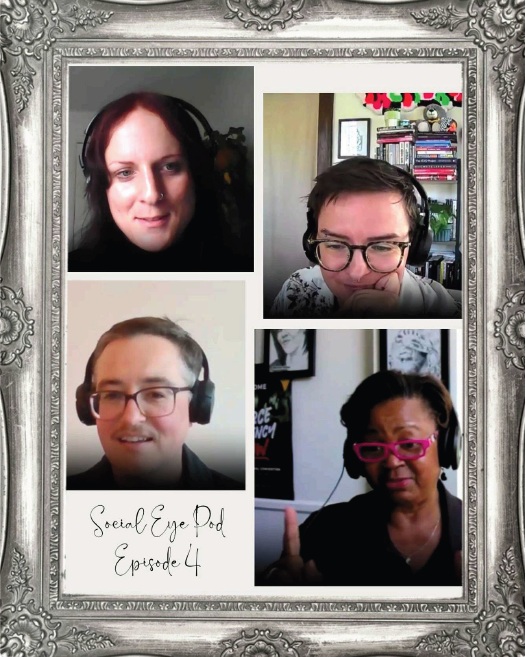
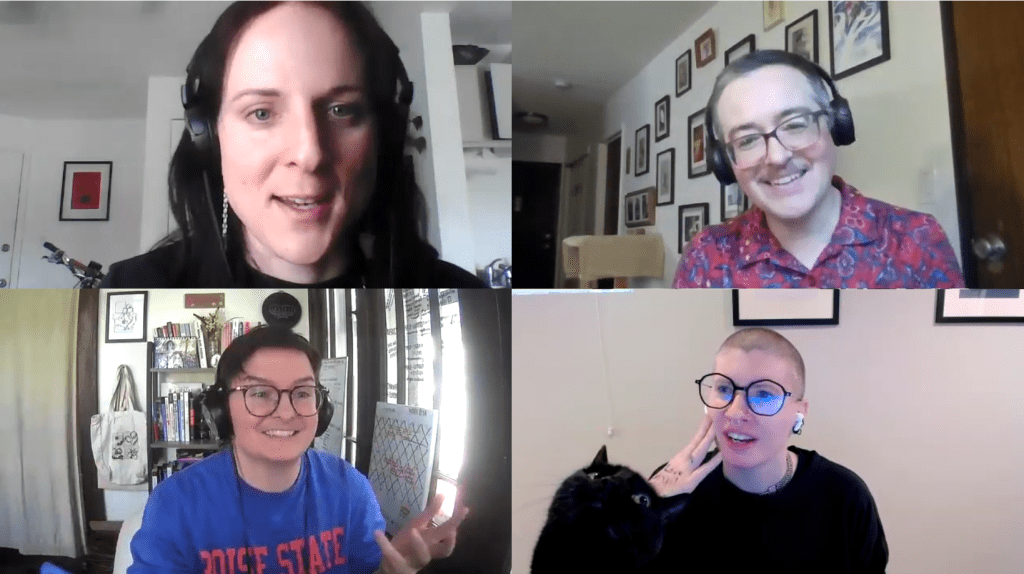
 The Social Eye Podcast